A Global History of Nations and Nationalism(s)



Winter 2024/2025
Lecturer: Dr. Deniz T. Kılınçoğlu
Course Description
Topic
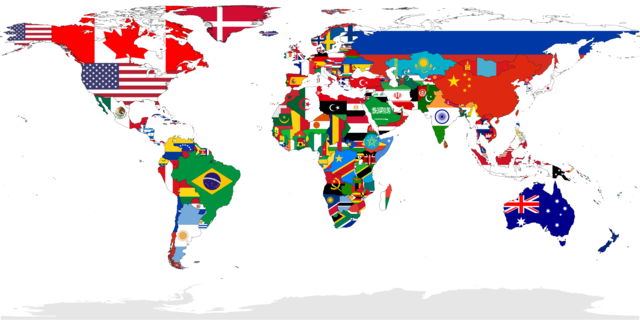
Nationalism has shaped individual and collective self-identification and self-construction in recent history more than any other ideology. Despite its episodic retreats from the focus of scholarship and journalism, it has remained the dominant worldview of modernity. It frames our sociopolitical common sense, as it has successfully shaped the global sociopolitical system. We simply take it for granted that everyone belongs to a nation, and the world is structured in an ‘inter-national’ system, where nations are represented by their states.
This course offers a global historical exploration of this complex social, political, economic, and highly personal phenomenon. We will start by examining various definitions of and theories about nationalism and nationhood. Then we will delve into multiple factors that have shaped national ideologies and the experiences of nationhood, from language and religion to capitalism and colonialism. This investigation will include interactions between national belonging and other dimensions of our intersectional identities, such as gender and class. Through engagement with case studies from different parts of the world, we will develop a richer understanding of the human experience of nationalism in its highly diverse forms. Finally, we will engage in an open, exploratory discussion about our world’s future with or without nations, nationalism, and the nation-state.
Approach and Style
This course provides an AI-aided, dynamically and interactively organized learning experience, fostering engagement between students, the lecturer, and AI. Beyond its core focus on nations and nationalisms, it offers a future-oriented environment where students can actively explore and work with AI tools, enhancing their learning and equipping them with skills for the evolving technological landscape. The main AI tool that we will use will be generative-AI-based chatbots (like Microsoft Copilot and ChatGPT), but we will have discussions on other relevant AI tools.

Watch: Wharton School (U-Penn) Interactive Crash Course: Practical AI for Teachers and Students (Aug 4, 2023) by Ethan R. Mollick and Lilach Mollick. Available at https://www.youtube.com/playlist?list=PLwRdpYzPkkn302_rL5RrXvQE8j0jLP02j
Objectives and Outcomes
- Having a comprehensive understanding of key concepts, events, and theories related to the formation and evolution of nations and nationalism(s).
- Being capable of critically analyzing the impact of nationalism across different historical periods and regions.
- Developing skills in using AI tools to enhance historical and social scientific research, engaging with both conventional and cutting-edge approaches to understanding history and its contemporary relevance.

Learning Method and Activities
This graduate seminar is structured around active student engagement with the weekly readings and class discussions.
Each week, one student will serve as the discussion leader, providing a brief and critical assessment of the assigned reading material, highlighting key themes and arguments, and offering questions for discussion. However, all students are expected to actively participate in discussions and contribute to the collective learning environment.
In addition to these core, in-class interactive activities, the students will write occasional short reports and a final, comprehensive research paper on a topic of their choosing, developed in consultation with the lecturer.
Course Structure and Readings
Week 1 | Oct 16, 2024 – Introduction
The inaugural meeting for getting to know the course and each other, and having an initial conversation about what we know, think, and feel about nationalism and its place in our lives, what we need to learn to gain a better understanding of this globally seminal issue.
Week 2 | Oct 23, 2024 – Nationalism: A General Overview
We begin with the ‘basics’ of the highly complex and equally ambiguous phenomena of nations and nationalism(s) and the research on them: definitions, variants, core concepts, main approaches, and historical trajectories.
Reading:
- Mylonas, Harris, and Maya Tudor. Varieties of Nationalism: Communities, Narratives, Identities. Cambridge: Cambridge University Press, 2023. pp. 15-49.
Week 3 | Oct 30, 2024 – Paradigms
In our third meeting, we will discuss the main paradigms in nationalism studies. We will visit different schools of thought and methods in nationalism studies, and, thereby, various meanings, histories, and dynamics of nationhood and nationalism.
Readings:
- Hearn, Jonathan S. Rethinking Nationalism: A Critical Introduction. Basingstoke: Palgrave, 2006. pp. 1-19.
- Smith, Anthony D. Nationalism: Theory, Ideology, History. Cambridge: Polity, 2010. pp. 47-64.

Week 4 | Nov 6, 2024 – Early Roots?
The pre-modern history of nations is a highly controversial subject. We will read about the earliest roots of nationhood from a leading advocate of the idea.
Reading:
- Grosby, S. (2021) Nations and Nationalism in World History. London: Routledge. pp. 40-93.
Week 5 | Nov. 13: – Crystallization 1: Modernity and its Revolutions
We will devote four weeks to examining the emergence of modern nations and nation-states and the crystallization of a global “inter-national” system from different perspectives and through their various implications.
Reading:
- Hobsbawm, E. J. Nations and Nationalism since 1780: Programme, Myth, Reality. Second Edition. Cambridge: Cambridge University Press, 1992. pp. 14-45.
Week 6 | Nov 20, 2024: No Class
Assignment: A mid-semester reflection paper on how class readings and discussions changed, challenged, confirmed, or added to the student’s knowledge, feelings, and thoughts about nationalism and nationhood.
Due: Nov. 24, 2024
Week 7 | Nov 27, 2024 – Crystallization 2: Empire, Imperialism, and Nation-State
Reading:
- Darwin, John. “Nationalism and Imperialism, c.1880–1940.” In The Oxford Handbook of the History of Nationalism, edited by John Breuilly. Oxford: Oxford University Press, 2013. pp. 340–58.
- Malešević, Siniša. “The Foundations of Statehood: Empires and Nation-States in the Longue Durée.” Thesis Eleven 139, no. 1, 2017, pp. 145–61.
Bayar, Y. “Nationalism and Empire” (2023)
Week 8 | Dec 4, 2024 – Crystallization 3: An Inter-national World Order
Reading:
- Breuilly, John. Nationalism and the State. 2nd edition. Manchester: Manchester University Press, 1995. pp. 367-80.
- Mayall, James. “International Society, State Sovereignty, and National Self-Determination.” In The Oxford Handbook of the History of Nationalism, edited by John Breuilly. Oxford University Press, 2013. pp. 537–55.
Week 9 | Dec 11, 2024 – Crystallization 4: Decolonization and New Shades of Nationalism
Reading:
- Hroch, Miroslav. “National Movements in the Habsburg and Ottoman Empires.” In The Oxford Handbook of the History of Nationalism, edited by John Breuilly. Oxford: Oxford University Press, 2013. pp. 175–98.
- Lonsdale, John. “Anti-Colonial Nationalism and Patriotism in Sub-Saharan Africa.” In The Oxford Handbook of the History of Nationalism, edited by John Breuilly. Oxford University Press, 2013. pp. 318–37.
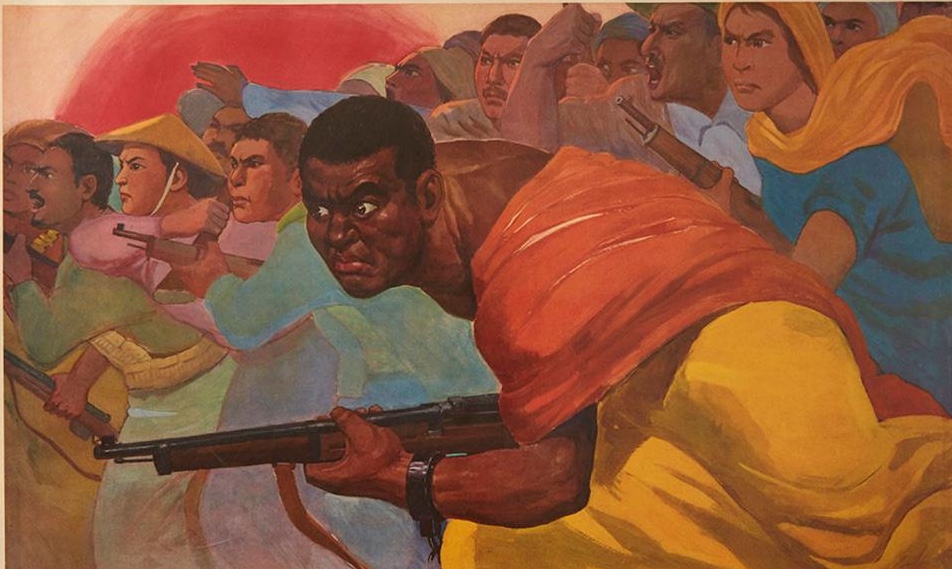
Week 10 | Dec 18, 2024 – Many Faces of Nationalism
What do different national historical trajectories, cultures, and ideologies in various regions tell us about nationalism and nationhood? How about its rival siblings, such as patriotism, and internal shades, such as civic and liberal versions?
Readings:
- Hroch, Miroslav. “The Nation as the Cradle of Nationalism and Patriotism.” Nations and Nationalism 26, no. 1 (2020): 5–21.
- Tamir, Yael (Yuli). “Not So Civic: Is There a Difference Between Ethnic and Civic Nationalism?” Annual Review of Political Science 22, no. Volume 22, 2019 (2019): 419–34.
Week 11 | Jan 8, 2025 – “I” as a Part of “We”: Personal Dimensions of Nationalism
We take a two-week break from following the global historical paths of nationalism and investigate how it has shaped our personal lives. In the first week, we will delve into how national ideologies influence our thoughts, emotions, and actions. The second week will involve examining how our national identity interacts with other dimensions of our complex identity structures (from gender to class).
Readings:
- Hearn, Jonathan. “National Identity: Banal, Personal and Embedded.” Nations and Nationalism 13, no. 4 (2007): 657–74.
- Heaney, Jonathan. “Emotions and Nationalism: A Reappraisal.” In Emotions in Politics, edited by Nicolas Demertzis. New York: Palgrave Macmillan, 2013. pp. 243–63.
Week 12 | Jan 15, 2025 – Gender, Class, Religion, and Other Contenders: National Identity in Intersectional Context
Readings:
- Kostantaras, D. “Nationalism and Social Class” (2018)
- Thomson, J. “Gender and Nationalism.” Nationalities Papers 48, no. 1 (2020): 3–11.
- Türkmen, G. “Nationalism and Religion” (2024)

Week 13 | Jan 22, 2025 – Digitalization, Environment, and Other 21st-Century Challenges and Opportunities for Nationalism – 1
We will proceed with our historical investigation by examining the recent challenges to nationalism in the era of globalization, digitalization, and climate change. We will discuss how nationalism has fared after a period of strong, widespread beliefs about its decline and the emergence of a post-national world order. Then, we will analyze the impact of climate change and digitalization on the discussions about nationalism.
Readings:
- Ariely, G. “Nationalism and Globalization” (2020)
- Conversi, D. “Nationalism and Climate Change” (2023)
Week 14 | Jan 29, 2025 – Digitalization, Environment, and Other 21st-Century Challenges and Opportunities for Nationalism – 2
Readings:
- Ahmad, Piotr. “Digital Nationalism as an Emergent Subfield of Nationalism Studies. The State of the Field and Key Issues.” National Identities 24, no. 4 (2022): 307–17.
- Mihelj, Sabina, and César Jiménez-Martínez. “Digital Nationalism: Understanding the Role of Digital Media in the Rise of ‘New’ Nationalism.” Nations and Nationalism 27, no. 2 (2021): 331–46.
Week 15 | Feb 5, 2025 – What is Happening Now? Contemporary Resurgence of Nationalism
Reading:
- Rabinowitz, B. S. Defensive Nationalism: Explaining the Rise of Populism and Fascism in the 21st Century. New York: Oxford University Press, 2023. pp. 1-7, 13-40.
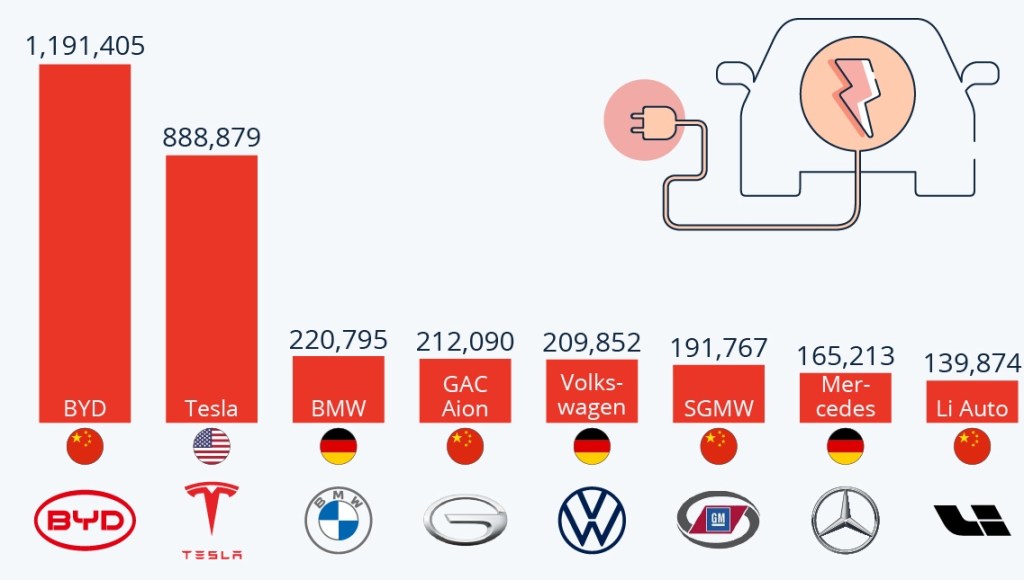
- Social Media, Electric Car, etc.:
Week 16 | Feb 12, 2025 – Review and Discussion
A final discussion on what we have learned about nationalism and nationhood, and how it has changed, if at all, our understanding of the world. Is nationalism a constructive or destructive power? Can it be harnessed for the public good, or should we simply move towards a post-national world order?
Readings:
- Emma Goldman, “Patriotism, a Menace to Liberty” (1911).
- Orwell, George, “The Lion and the Unicorn: Socialism and the English Genius-Part I: England Your England” (1941).
- Sapolsky, Robert. “This Is Your Brain on Nationalism.” Foreign Affairs, April 2019.

 The National Mind